| |
|
|
A Niche in Time
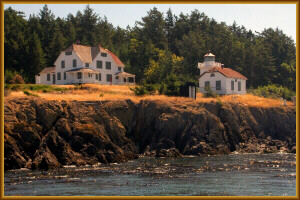 Burrows Island Light Station occupies an important niche in the maritime history of the Pacific Northwest. Standing sentinel in the busy and navigationally complex mouth of Rosario Straits, the light station and the Coast Guard sailors who ran it, offered a century of faithful service. From cargo ships bound for Alaska via the Inside Passage to unfortunate boaters beset by engine trouble, Burrows Island Light Station served as a beacon and a refuge, as needed.
In November, 2006, NWSS applied to become custodians of the light station, with a goal of rehabilitating its buildings and landscape to promote a historic educational and recreational landmark. On June 23, 2010 U.S. Secretary of the Interior Ken Salizar signed the documents that will eventually turn the station over to the Schooner Society. In April of 2011 the Society became the licensed custodians of the property and began the restoration. Check back for updates. Volunteering opportunities will be scheduled as soon as practical.
BILS History
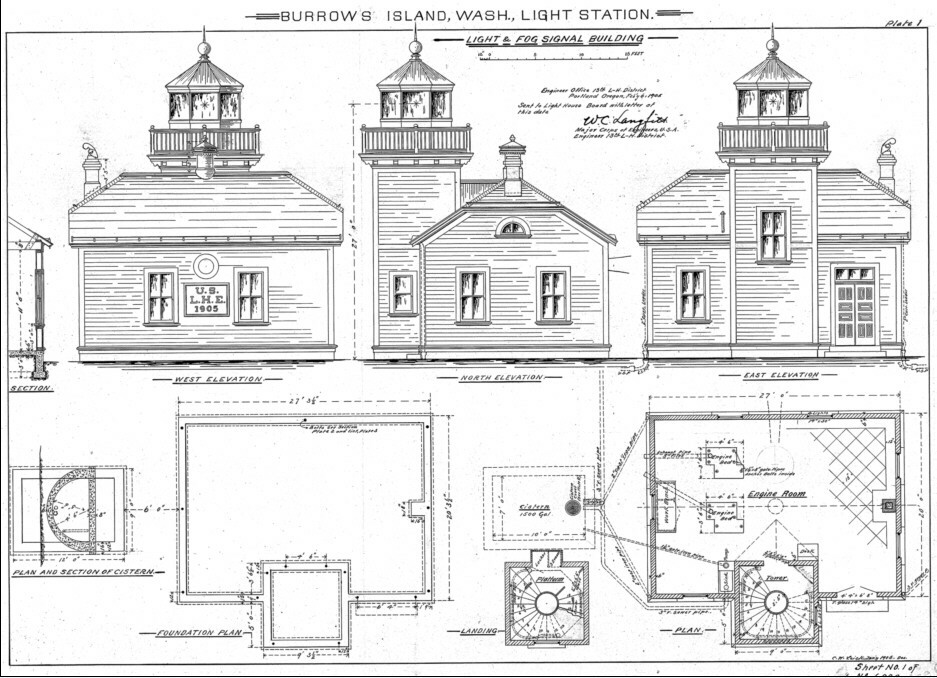
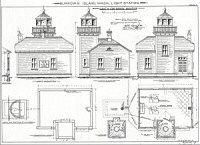
Built in 1906, the Station consists of a Lighthouse with 34' tall wooden foghorn tower, a two-story wooden duplex that served as family quarters, a pumphouse, and a boathouse above a boat landing with a derrick and landing stairway.
The Station buildings, like most of the lighthouses in the Pacific Northwest, were designed by architect C.W. Lieck. The flashing two-second light overlooks Rosario Straits and is well positioned north of Dennis Shoal and opposite Bird Rocks. Unlike many light Stations, the actual structure is a simple, homey design, thanks to the toehold of flat land on the otherwise steep-sided island.
Originally maintained by the Lighthouse Service, the Station was taken over by the Coast Guard in 1939. A single family Officer-in-Charge house was added near the duplex and three Coast Guardsmen and their families took up residence, serving two-year tours on the island, with trips to Anacortes for provisions. The Coast Guard buoy tender Fir visited twice a year, bringing maintenance and operational supplies, including fuel for the generators.
First official mention of the lighthouse is recorded here:
"To establish a light-house and fog signal at Burrows Island, Rosario Strait, State of Washington. There is much traffic through Rosario Strait, which will naturally increase in the future. During certain seasons of the year fog and smoke from forest fires prevail. Burrows Island is a point of departure for most vessels plying the strait. The tides and currents here are strong and variable, and there are several dangerous reefs in the immediate vicinity. A light and fog signal at the southwest point of Burrows Island would be of great use to commerce and navigation. It is estimated that they could be established for not exceeding $15,000, and it is recommended that an appropriation of this amount be made therefore."
57th Congressional Report #419 dated December 26, 1901
|
|